
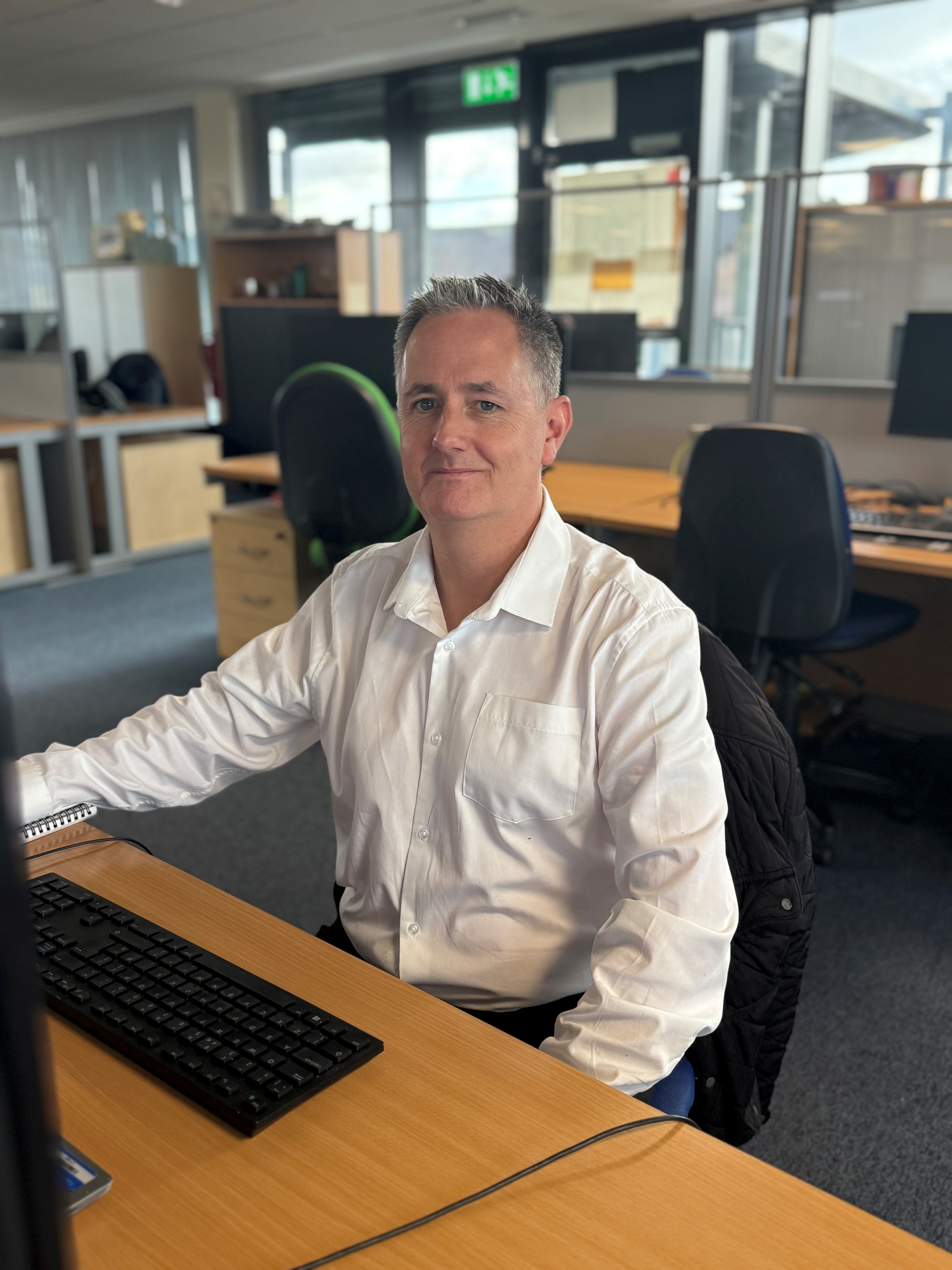
 Since 2004, Principal Information Analyst for Community services Daniel Haynes, has been bridging the gap between spreadsheets and the frontline to keep patient care moving.
It isn’t every day you meet someone who trades history books for data tables, but for Daniel Haynes, the move from humanities to information was a natural fit. Despite having a degree in English and History, Daniel found himself drawn to the logic and structure of data.
Since joining the Information team in 2004, he has become a mainstay of the department, proving that a background in humanities can be the perfect foundation for a role that requires curiosity, problem-solving, and a clear way of looking at the world.
"My degree is all English, History, and humanities subjects, so this role is totally different from my studies. But when a job came up in information in 2004, I thought, ‘I’m quite interested in this.’ I liked the activity and the figures.
“There was a very steep learning curve, and it probably took a good 12 months to really learn the data but I found the logic of it really interesting. I find it rewarding because I feel like I'm making an impact on the whole system by helping clinicians get the data they need."
Operating in what he calls the "digital engine room," Daniel bridges the gap between the templates clinicians fill out and the reports the Trust uses to make decisions. He uses his experience to navigate the "back end" of our systems, ensuring the data we see is accurate and useful.
"I do a lot of data engineering. Users put data into front-end templates, and I use a back-end connection to 'snoop' or query that data using code like SQL and Python.
“I build the tables so the BI team can create visual reports. It’s all about taking figures that might mean nothing on their own and building them into something meaningful, and I also work with services to make sure data quality stays high."
For Daniel, years of spreadsheets haven't changed the main goal: the patient. Whether it is ensuring waiting lists are managed correctly or capturing sensitive end-of-life care milestones, his work is about helping clinicians do their jobs more effectively.
"Our work has a massive impact on the patient. If my report flags that someone has been waiting six months, we can look at getting them in quicker. In community care, we do End of Life reporting to ensure patients have had those key discussions about their preferences.
“While the clinicians focus on patient care, which always comes first, we are helping them by highlighting potential problems before they escalate."
When he isn't querying databases, Daniel brings that same steady determination to the great outdoors. Whether he is trekking across the Highlands or tending to his trio of tortoises, he stays active and grounded in the local area.
"Outside of work, I love being outdoors. I did the 96-mile West Highland Way last year. My feet were wrecked by day three, but I pushed through and finished.
“I love wild camping in Scotland, travelling, and I've always got a project on the go, like practicing a new language. At home, I do a lot of cooking and look after my three tortoises: Sheldon, Madge, and Trevor. They aren't named after The Big Bang Theory, even though everyone seems to think they are!"
Found a problem? Report it and help us to improve our website